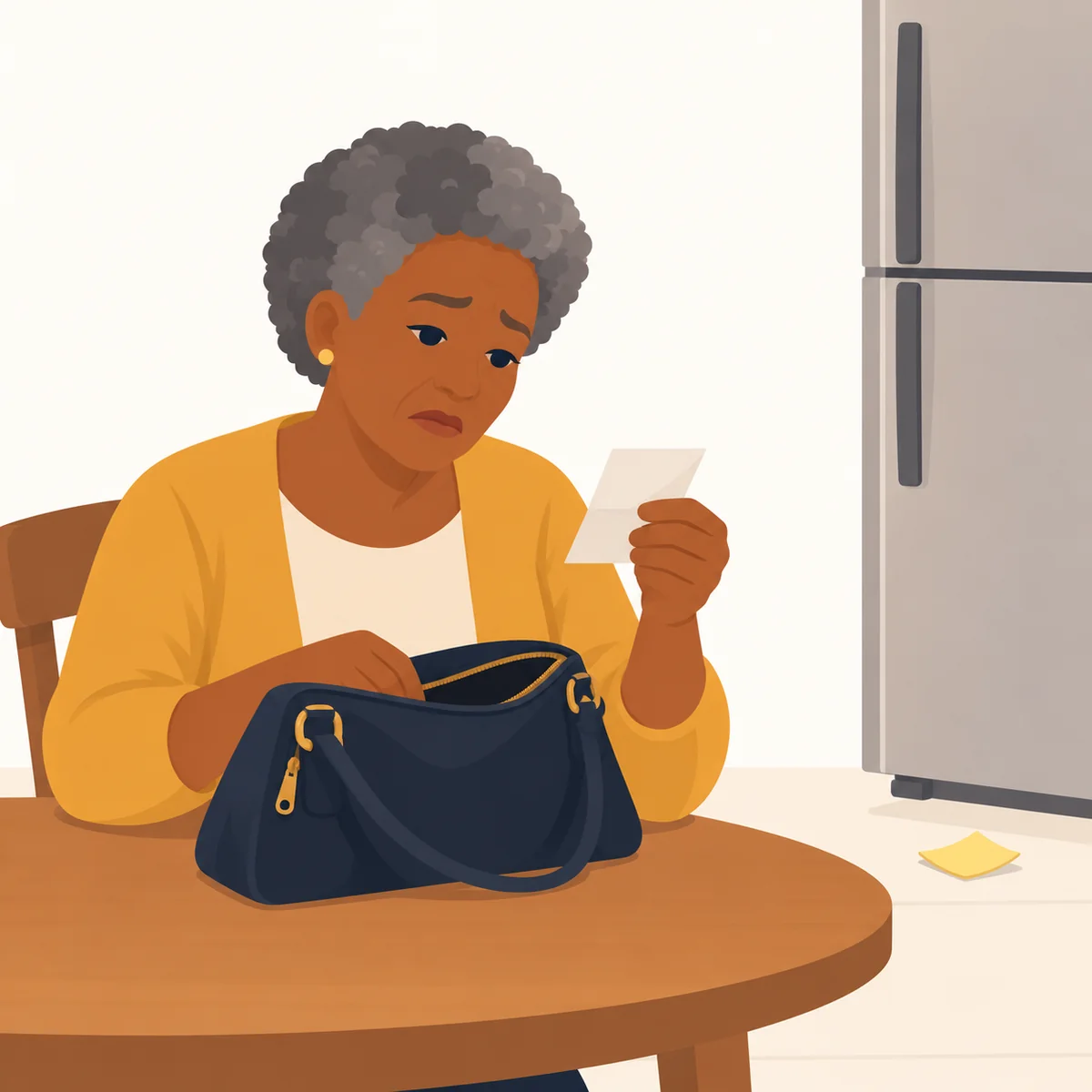
Gloria is 61. At her last visit, her doctor said three things. Get a blood test before your next visit. See the kidney doctor. Come back in three months.
She meant to. The lab slip went in her purse. The kidney doctor's number went on a sticky note. Then her grandson got sick, and the sticky note fell behind the fridge.
Three months later she was back in the chair. No blood test. No kidney visit. The doctor could not change anything, because nothing new was known. "Let's try again," he said. Another three months.
Names and details are made up. This is not a real patient. But if you have ever found an old lab slip in your purse, this is for you.
Why this happens
A doctor visit ends with a to-do list, but nobody hands you the list. You are supposed to hold it in your head, and heads are not good at that. People forget 40 to 80 percent of what the doctor said right away. (Kessels, 2003)
Referrals get lost the same way. In one study of 776 patients sent to a specialist, about one in five never got there. (Forrest et al., Annals of Family Medicine, 2007)
Every step you miss is a visit that cannot move forward.
What you can do
- Ask for the list. Before you leave, say, "What do I need to do before next time?" Ask them to write it down.
- Make it three questions. Where do I go? When? Who makes the appointment, me or you?
- Do the easy one today. If the lab is in the same building, go now. If you have to call the specialist, call from the parking lot.
- Put it on the calendar, not a sticky note. Your phone's calendar, or the one on the wall. A date with a reminder.
- Check the list the week before your next visit. If something is not done, call the office. They would rather hear from you early.
How Keeybod helps
Keeybod turns your visit into an easy-to-read summary with a "What you need to do" list, so the three things are on your phone, not in your head. Your next appointment and what to do before it are there too. It is free during the pilot.
By Dr. Jim Besong, family medicine doctor. This is general information, not medical advice. Ask your own doctor about your care.
About the author
Dr. Jim Besong is a family medicine doctor in Florida and a U.S. Marine veteran. He started Keeybod so patients can remember and understand what their doctor said.
Join the pilot list