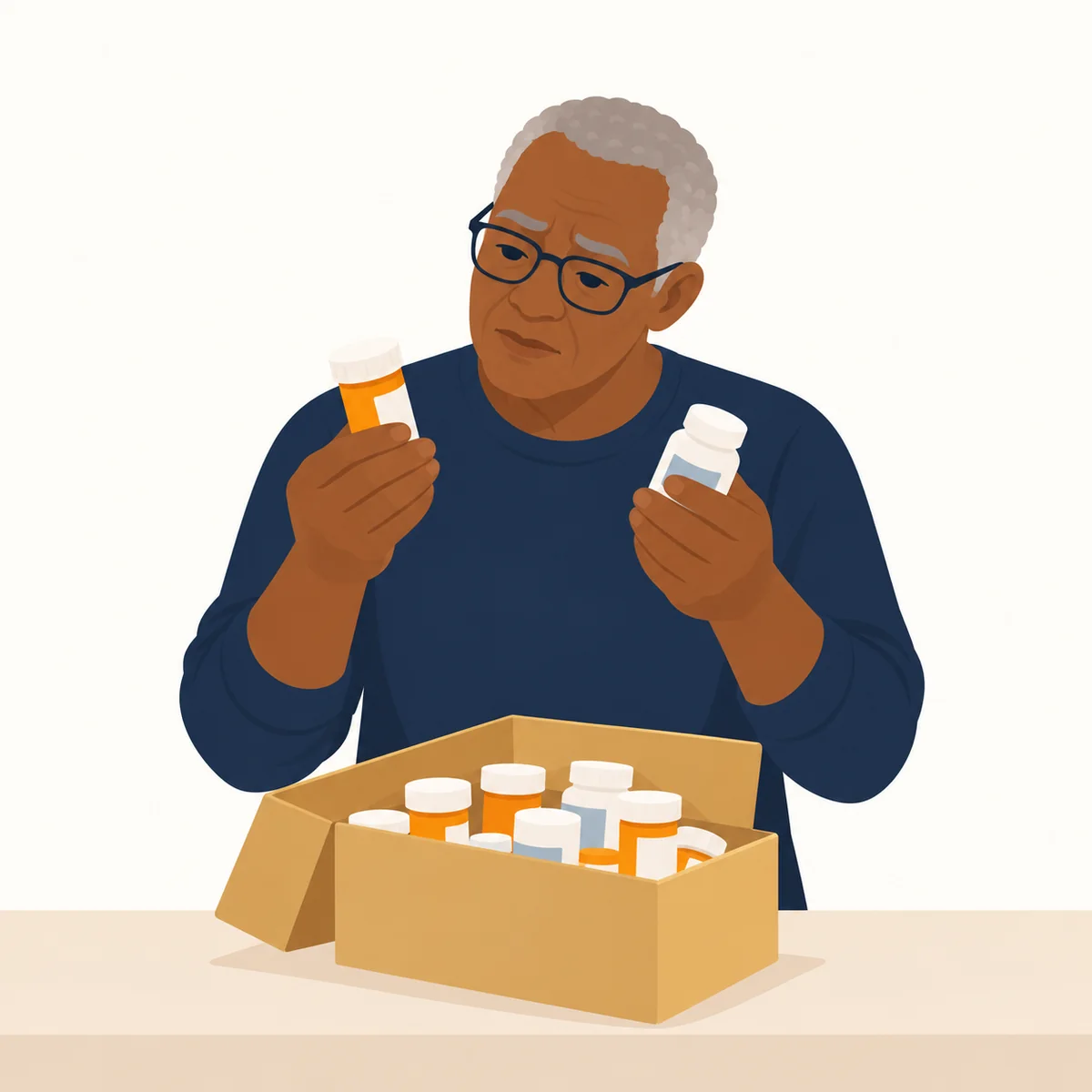
Walter is 68. He takes nine pills a day. He keeps them in a shoebox on the kitchen counter.
Two of the bottles looked different. One had a long name he could not say. The other had a short name he had seen on TV. He took both every morning. He did not know they were the same medicine. One was the brand name, and one was the plain name.
For a month he was taking double. He got dizzy. One morning he fell in the bathroom. His neighbor found him. He spent two nights in the hospital.
Names and details are made up. This is not a real patient. But this happens more often than you think.
Why this happens
Most medicines have two names. A brand name, like the one on TV, and a plain name, the one on the bottle from the pharmacy. They look like two different pills. They are not.
The more medicines you take, the easier it is to mix them up. Every year in the United States, more than 1.5 million people go to the emergency room because of a problem with their medicines. People over 65 are more than twice as likely to go. (CDC Medication Safety)
So if you take several medicines and feel lost, you are not careless. You have a hard job.
What you can do
- Know three things about every pill. Its name, how much to take, and what it is for. If you don't know one of the three, ask.
- Keep one list. Write down every medicine, including vitamins and things you buy without a prescription. Keep a photo of it on your phone.
- Bring the bottles. Once a year, bring every bottle to your visit. Your doctor can check for doubles and for pills you no longer need.
- Use one pharmacy. When all your pills come from one place, the pharmacist can catch mix-ups.
- Ask before you add anything. Even a cold medicine or a vitamin can clash with what you already take.
How Keeybod helps
Keeybod keeps your medicine list on your phone. For each one it shows the name, how much to take, and what it is for. When a visit changes something, the list shows what changed. It is free during the pilot.
By Dr. Jim Besong, family medicine doctor. This is general information, not medical advice. Ask your own doctor about your care.
About the author
Dr. Jim Besong is a family medicine doctor in Florida and a U.S. Marine veteran. He started Keeybod so patients can remember and understand what their doctor said.
Join the pilot list